“One of our biggest problems was that some scientific lectures can be very boring,” Jermol says. “it was necessary to develop technology so that people could look at the slides and keep their interest. Many people would only watch five minutes.” To respond to these issues, the videolectures team developed a series of tools. Enabled by a move to the Django web toolkit in early 2007, PowerPoint slides now appear next to the video, timed to change as the video plays. Talks on similar topics are linked. Viewers can comment on the lectures, leading to online discussions about the material. The number of downloads are listed, and lectures are ranked according to their popularity.

These innovations have created a real change to the style and quality of presentations being made by academics. “People check their ratings and ask themselves why someone less famous than they are is getting more downloads,” says Jermol. “This encourages them to improve their style.”

It seems that videolectures.net is achieving the impossible – helping lecturers to motivate themselves into becoming better at giving presentations. This is helping to drive a cultural change in communication, with younger researchers becoming more used to eye-catching and effective presentation techniques.

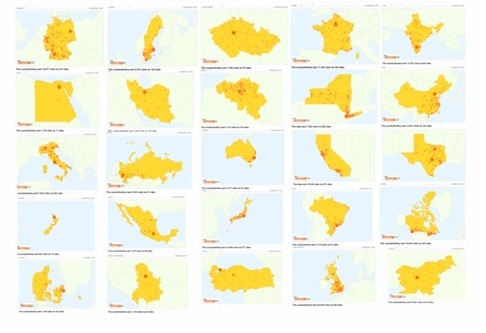
As the technology improves and is made increasingly consistent over all operating systems and browsers, the number of visits from people across the world increases (see map). Feedback from viewers is also excellent, with complimentary comments from as far afield as Africa and Australia.

Today videolectures.net is one of the leading web-based educational portals of its kind. It already has links to academic sites that host videoed lectures, and is being approached by others such as MITopencourseware to share content. ACM, Carnegie Mellon University and others have agreed for their events to be recorded by videolectures. There are even tentative plans to host material from countries such as China and create an automatic subtitling service to enable translation for all.

The future of this exciting project looks bright, especially with PASCAL 2 continuing the considerable support begun by PASCAL. Over the coming years the videolectures team hope to build a major consortium of high quality universities to provide live streaming of local and global events. Future material may be hosted across many sites, shared using open-source code, and maybe downloadable to individual desktops. Semantic tools that enable users to visualise similarities between topics, people and lectures may help users find the right lecture for them.

People check their ratings and ask themselves why someone less famous than they are is getting more downloads. This encourages them to improve their style.

videolectures

Sebastian Mislej has more ambitions: “One other major goal is to cover all the major world scientific conferences for general and specific scientific users in different areas and to expand the academic disciplines for every possible viewer to Fine Arts, Humanities, Social studies and Law.”

Mitja Jermol is rightly proud of their achievements. “We have become established as a reference portal for users around the world.” He also has some ambitions of his own, suggesting that a video-based journal with lectures reviewed by a scientific committee would be a valuable new way to present scientific research. Perhaps one day the exclusive and expensive paper-based, written journal article might become a thing of the past. In the words of Jermol,”In the USA several years ago when they wanted to put everything online for free, the publishing industry stopped it from happening. I believe knowledge is for the whole of society and should not be suppressed.”

Resources:
Videolectures: http://videolectures.net/
Jozef Stefan Institute: http://www.ijs.si/ijsw/JSI
PASCAL: http://www.pascal-network.org/