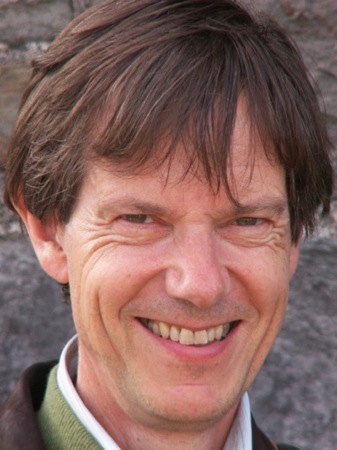
I first became interested in neural networks in about 1987. The idea that machines could learn was intriguing. But it seemed that there was a need for a more rigorous analysis. Aspects of that led me to computational learning theory (COLT) which was just getting off the ground at that point.
I founded a kind of European COLT (EuroColt) in 1993 with Martin Anthony. Then in 1994 I coordinated NeuroColt 1 , followed by Neurocolt 2. Most recently, PASCAL began in 2004.
Through these I tried to understand some of the more successful learning algorithms, particularly support vector machines. Over time I gradually moved back into applications, from just theoretical work; taking the ideas and seeing if they could be applied. I now have a bit of a mix, probably slightly more on the application side.
I think coordinating PASCAL is enjoyable partly because I try to do it with a minimum of fuss, which I prefer. You can make these jobs as complicated as you want. The other thing is that for a network to succeed you can’t tell people what to do. That is the first step to failure. So what you really have to do is enable – give them the environment in which they can do what they want to do anyway, but you’re encouraging them.
I also think it’s been enjoyable because we’ve had an incredibly good group of people in Europe. I look around and everywhere there are really strong people working in this area. It’s a very nice convergence of talent that you can see in the theory and practical sides that has meant that you feel it’s worthwhile – stuff is coming out that’s really good. And also they really are very decent people: they help, they play ball, they do what needs to be done.
My previous experience made me more confident when helping to plan PASCAL; I was drawing on a lot of the experience of seeing how a network can run. You can’t be too laissez faire, you have to build in feedback mechanisms that ensure people want to get involved. They’re not going to do something unless there’s something in it for them, so you have to set it up in way that it is a win-win situation. I also think it’s important to keep a theme of well-founded rigorous research – a quality line that you have to try to keep well-defined, so people feel that this is worth being a part of.
|