 |
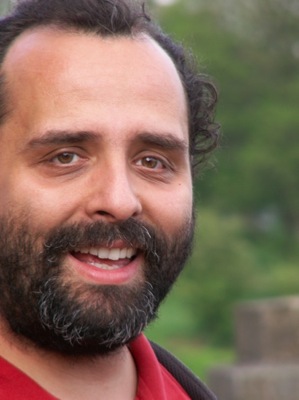
I am Professor of Artificial Intelligence at University of Bristol. I’m interested in all aspects of learning and computers: statistical, algorithmic, implementational, and their application to problems mostly in the fields of genomics and the Web. I am also becoming more interested in cognitive systems, intelligent systems and producing intelligent behaviour in general.
I was not part of Pascal from its start as at the time I was working in the US. My first involvement with PASCAL was organising a workshop in Italy with John Shawe-Taylor. In 2006 I came back to the UK and joined the consortium, taking over the role of dissemination and public relations (the previous person left).
I benefited through PASCAL funding workshops, meetings, hosting visitors and summer schools. I was already very closely involved with many of the researchers, but my students certainly benefited. I believe PASCAL is almost like a trademark – being involved in PASCAL is like an indicator of quality. Perhaps the main benefit is that if you have a good idea, you don’t have to worry about funding, you can concentrate on the work. PASCAL provided a good, non-bureaucratic way of getting things done.
In our community I don't feel we should have any envy of America or Japan. We are leading, we contribute a lot of ideas, and this is the result of organisation, as well as talent. PASCAL (and its predecessor EU Networks) have played a central role in fostering our research community. PASCAL members are constantly in touch, not only by email but also by regular videoconferencing. We also attend the same lectures, watch the same videolectures, So we have a common, shared base of knowledge which makes it very easy to interact when we do meet. We are constantly thinking, working and acting as if we are part of the same group. I think it is a model for many activities, other than research – we really work together!
This is the recipe: you take some clever people, you give them just enough money to work together. These are people who like to work. You give them difficult problems. And because of this, a research community forms, naturally self-organising. One person is in a company, another is a student, another is a professor, and they all work together and get things done. In many ways the next generation of machine learning has come out of PASCAL.
Nello Cristianini |